
Who We Are
Dumpter Pro is a professional junk removal Company.
Our junk removal is a service that involves the pick up and removal of unwanted items. Depending on the items being hauled the pricing will vary.
Once the items have been removed from the property they are hauled away never to be seen again. They may end up going to a recycling center, a second use store, or a disposal station. At Junker our goal is to have most of our items NOT end up in our landfills.
Choose Yours
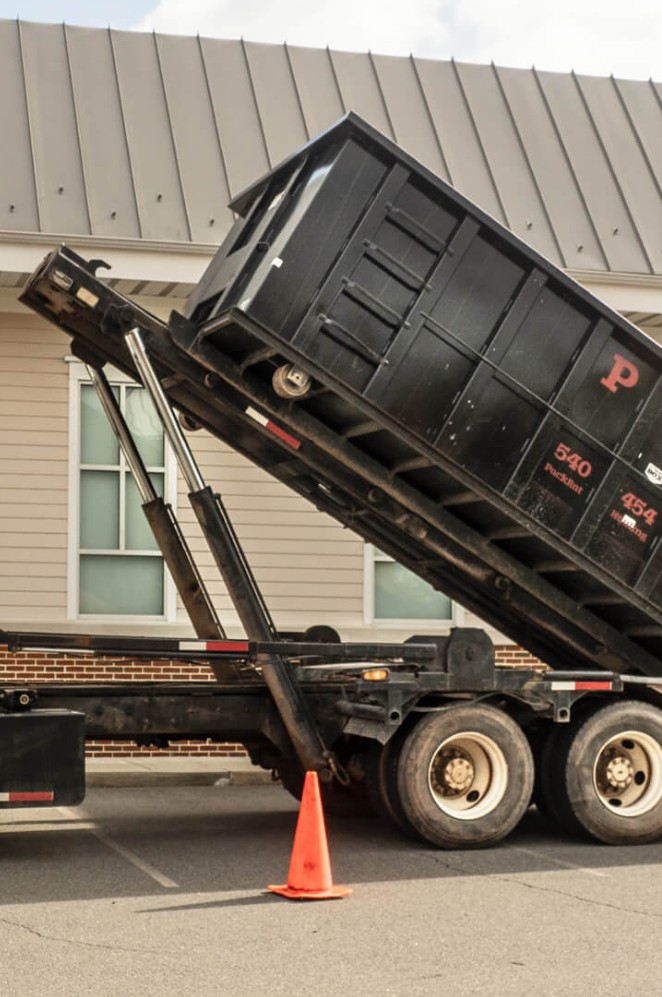
Our Roll-Off Dumpsters

10 Yard Mobile Dumpster
Holds 4x Pickup Truck Loads
Our most popular size, good for seasonal cleanouts, small remodels, roofing projects or debris removal.
Dimensions
22'9" L x 8'3" W x 4'4" H

15 Yard Mobile Dumpster
Holds 6x Pickup Truck Loads
Our most popular size, good for seasonal cleanouts, small remodels, roofing projects or debris removal.
Dimensions
22'9" L x 8'3" W x 4'4" H

20 Yard Mobile Dumpster
Holds 8x Pickup Truck Loads
Good for seasonal cleanouts, small remodels, roofing projects or debris removal.
Dimensions
22'9" L x 8'3" W x 4'4" H
Concrete Dumpster Rental: What You Need to Know Before You Book
Concrete, brick, and asphalt go in a separate container. Here is why, what else is accepted, how weight limits work, and what happens when you mix the wrong materials.
The concrete-only dumpster is the most misunderstood container in our lineup. Customers who have rented standard roll-offs before assume concrete is just another material that goes in whatever bin they book. It is not. Concrete, brick, block, stone, and asphalt require a dedicated container because of weight, and because the disposal process for clean masonry is fundamentally different from mixed debris.
This guide explains what the concrete-only container is, what it accepts, what it does not, how the weight math works, and the situations where mixing materials costs you more money and causes real problems at the disposal facility. If you are planning a driveway tear-out, a patio demolition, a foundation repair, or any project that generates heavy masonry debris, read this before you call.
Why Concrete Needs Its Own Container
A cubic yard of concrete weighs roughly 4,000 pounds. A cubic yard of mixed household debris weighs a fraction of that. A standard roll-off container is designed and rated for a mixed load where the average weight per cubic foot stays within a range that the truck can safely transport and that the disposal facility can process efficiently.
When you load concrete into a standard roll-off, the container can reach its weight limit while still looking mostly empty. A 20-yard standard container loaded with a few yards of broken concrete slabs may be visually a quarter full but already at or past its weight capacity. Hauling an overweight container is a safety issue for the truck and driver, a compliance issue on public roads, and a liability the rental company cannot take on.
The concrete-only container is built and rated for the weight of masonry materials. It is the right tool for the job, and booking it upfront costs less than the overweight charges and potential failed-trip fees that come from loading concrete into the wrong container.
What the Concrete Dumpster Accepts
The concrete-only container is strictly for clean masonry and pavement materials. Nothing else.
Accepted
- Concrete slabs and broken concrete
- Brick and mortar
- Concrete block and cinder block
- Natural stone and flagstone
- Masonry and stucco
- Asphalt pavement
- Asphalt millings
- Asphalt shingles (roofing tear-off)
- Paver stones
- Gravel and rock
Not Accepted
- Wood framing, decking, or lumber
- Drywall and plaster
- Metal, rebar, or wire mesh
- Roofing material other than asphalt shingles
- General household trash
- Dirt and soil
- Sod and organic material
- Hazardous materials of any kind
- Tires, batteries, or fluids
If you have a project that generates both masonry and mixed debris, you need two separate containers. See the Projects That Need Two Containers section below.
Weight Limits and Why They Matter
Weight is the central issue with concrete disposal. Here is a simple reference for the materials most commonly loaded into our concrete container:
| Material | Approx. Weight Per Cubic Yard | Notes |
|---|---|---|
| Concrete slab | 3,700-4,050 lbs | Most common load. Even a small driveway section adds up fast. |
| Brick (solid) | 3,000-3,500 lbs | Dense. A partial pallet of brick is heavier than it looks. |
| Cinder block | 2,000-2,500 lbs | Lighter than solid brick but still heavy relative to cubic feet. |
| Asphalt pavement | 3,200-3,600 lbs | Compact asphalt millings run toward the high end of this range. |
| Asphalt shingles | 1,800-2,500 lbs | Significantly lighter than pavement. Large roofing jobs add up by square count. |
| Natural stone | 3,000-4,500 lbs | Varies significantly by stone type. Granite and marble run heaviest. |
| Paver stones | 2,800-3,400 lbs | A typical patio paver project generates more weight than homeowners expect. |
When you call to book a concrete container, tell us the material type and your approximate volume or square footage. For a driveway tear-out, the length, width, and thickness of the slab give us everything we need to estimate the load. We will confirm whether the volume falls within the container's capacity or whether the project warrants a different approach.
Common Projects That Use the Concrete Container
Driveway tear-outs
One of the most common uses. A standard two-car concrete driveway (20 feet wide by 20 feet long, 4 inches thick) contains roughly 5 cubic yards of concrete and weighs approximately 18,000 to 20,000 pounds. That load requires a concrete-only container and fills it substantially. Call with the dimensions of your driveway before booking.
Patio demolition
Poured concrete patios and paver patios both go in the concrete container. Paver removal often goes faster than homeowners expect because the pavers stack efficiently and load quickly. What slows the job is the sand base underneath, which adds weight without adding much cubic volume. Mention if the project includes significant amounts of base material when you call.
Foundation and slab repairs
Breaking out sections of a foundation wall or interior slab generates dense, heavy concrete in irregular pieces. This is exactly what the concrete container is designed for. Contractors doing foundation work can call (678) 306-9993 to discuss volume estimates and scheduling around excavation timelines.
Sidewalk and curb removal
Municipal sidewalk and curb projects are common across middle Georgia as neighborhoods upgrade infrastructure. Broken sidewalk slabs go directly in the concrete container. Coordinate with the project manager on site access and delivery timing before the crew starts breaking material.
Block wall demolition
Retaining walls, garden walls, and block structures go in the concrete container. A single-wythe block wall 50 feet long and 4 feet tall contains several tons of material. Break the blocks into manageable sections for loading rather than trying to drop whole wall sections into the bin.
We get calls fairly regularly from homeowners who have booked a standard 20-yard container for what they describe as a "small" concrete project. The word small is doing a lot of work in those conversations. A customer in Forsyth called once to say he needed to haul off "a few pieces" of his old driveway after having a new one poured. He had already loaded the bin about a third of the way when he called us back to ask why it felt so heavy to push with his foot.
Those few pieces were the apron and the front section of a two-car driveway. About 3 cubic yards of concrete. Well over five tons. We explained that the standard roll-off was not built for that load, pulled it, and got him a concrete container the next morning. He lost a day but the job finished fine. If he had called with "concrete driveway sections" instead of "a few pieces," we would have caught it at booking. The material description matters as much as the volume estimate.
Joe Hardin, Co-Founder, The Dumpster Co.What Happens When You Mix Materials
The concrete-only container must remain free of wood, metal, drywall, roofing material (other than asphalt shingles), soil, and general debris. This is not a preference. It is a disposal facility requirement.
Clean masonry and pavement are processed at facilities that recycle concrete aggregate, asphalt, and similar materials. Mixed debris contaminating a concrete load changes how it can be processed and may mean the entire load is reclassified as general waste and disposed of at a higher rate. That reclassification cost gets passed back to the customer as an overage charge.
Projects That Need Two Containers
Some projects generate both masonry debris and mixed construction debris at the same time. A driveway replacement that also involves demo work on a detached garage. A patio teardown combined with a deck removal. A foundation repair alongside a basement cleanout. In these cases, you need two separate containers on site at the same time: a concrete-only container for the masonry and a standard roll-off for everything else.
The Dumpster Co. can coordinate both deliveries to arrive on the same day or on the schedule that makes most sense for your project sequence. Call (678) 306-9993 and describe the full scope of what you are doing. We will recommend the right container for each material type and sequence the deliveries around your project timeline.
For a reference on what goes in the standard roll-off alongside a concrete project, see our accepted materials guide.
Placement for Heavy Masonry Loads
A fully loaded concrete container is one of the heaviest loads a roll-off truck carries. Placement decisions that are fine for a standard debris load can become problems with concrete.
- Driveway surface: place plywood boards under the container's contact points before delivery on any asphalt driveway, any older concrete that has developed surface cracking, or any paver surface. The contact pressure from a loaded concrete container can cause damage that is expensive to repair. This is true even on driveways that have handled standard roll-offs without issue before.
- Soft ground: do not place a concrete container on soft or saturated soil without a base of crushed stone or compacted gravel. The container will settle and become difficult to retrieve. Confirm ground conditions when you book.
- Loading access: concrete comes off a driveway or patio in irregular chunks. Position the container's open end as close to the work area as possible to minimize the distance the crew has to carry heavy material.
- Weight distribution while loading: spread heavy concrete pieces across the full floor of the container rather than stacking them in one section. Even weight distribution protects the container and makes pickup safer for the driver.
Frequently Asked Questions
Concrete, brick, or asphalt project? Call before you book.
Give us the material and the volume and we will quote it accurately. Flat-rate pricing, same-week delivery, no surprises at pickup.
(678) 306-9993 View Concrete Container