Who We Are
Dumpter Pro is a professional junk removal Company.
Our junk removal is a service that involves the pick up and removal of unwanted items. Depending on the items being hauled the pricing will vary.
Once the items have been removed from the property they are hauled away never to be seen again. They may end up going to a recycling center, a second use store, or a disposal station. At Junker our goal is to have most of our items NOT end up in our landfills.
Choose Yours
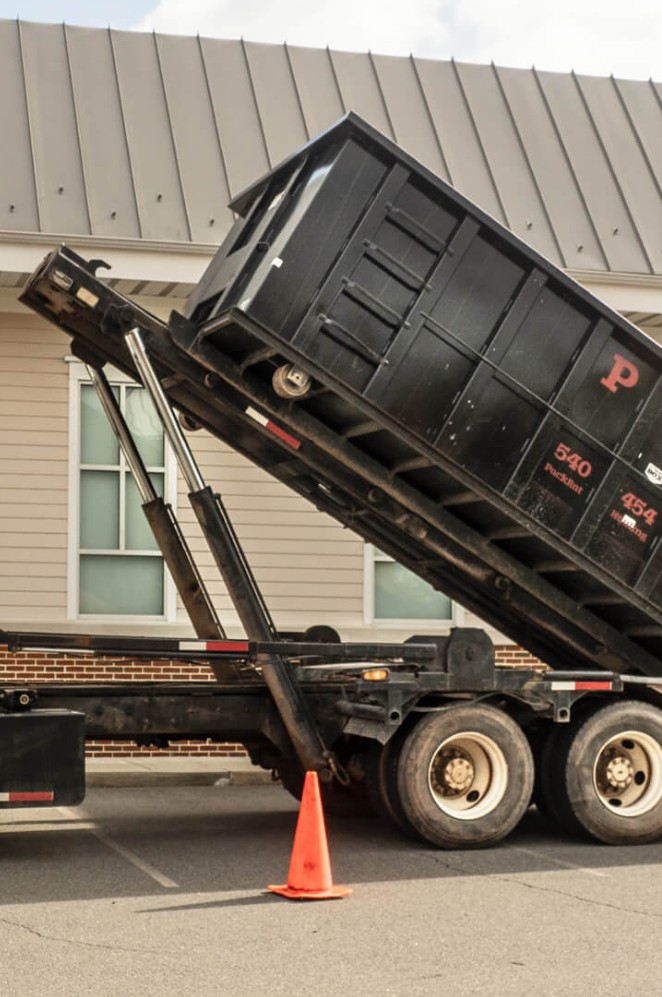
Our Roll-Off Dumpsters

10 Yard Mobile Dumpster
Holds 4x Pickup Truck Loads
Our most popular size, good for seasonal cleanouts, small remodels, roofing projects or debris removal.
Dimensions
22'9" L x 8'3" W x 4'4" H
15 Yard Mobile Dumpster
Holds 6x Pickup Truck Loads
Our most popular size, good for seasonal cleanouts, small remodels, roofing projects or debris removal.
Dimensions
22'9" L x 8'3" W x 4'4" H
20 Yard Mobile Dumpster
Holds 8x Pickup Truck Loads
Good for seasonal cleanouts, small remodels, roofing projects or debris removal.
Dimensions
22'9" L x 8'3" W x 4'4" H
What Cannot Go in a Dumpster? Prohibited Items and What to Do Instead
The list is longer than most people expect, and some of the items show up on nearly every renovation and cleanout project. Here is each prohibited category, why it matters, and where it goes instead.
Most people know that chemicals and hazardous waste cannot go in a dumpster. What surprises them is how many everyday items fall into that category. Paint cans. Propane tanks. The old refrigerator in the garage. Fluorescent tubes from the kitchen renovation. A bag of grass fertilizer from the shed. None of these go in the bin, and all of them show up on job sites and in homes every week.
The reason prohibited items matter goes beyond the fee risk. Hazardous materials in a landfill-bound container can contaminate soil and groundwater. Flammable materials create a safety risk during transport. Appliances with refrigerants require certified recovery before disposal under federal law. These are not arbitrary rules. They exist because the consequences of improper disposal are real and serious.
This guide covers each prohibited category in detail: what it includes, why it is prohibited, and the specific disposal alternatives available in middle Georgia.
Quick Reference List
Every item on this list is prohibited in a standard roll-off container and in the concrete-only container. No exceptions regardless of volume, project type, or how the item is packaged.
| Prohibited Item | Where to Dispose |
|---|---|
| Paint (liquid, any type) | Household Hazardous Waste event or retailer take-back |
| Motor oil and automotive fluids | Auto parts stores (free collection), service stations |
| Propane tanks (full or empty) | Propane retailers, hardware stores with exchange programs |
| Car batteries and lead-acid batteries | Auto parts stores (free collection), battery retailers |
| Tires (any size) | Tire retailers, county tire collection events |
| Refrigerators, freezers, AC units | Appliance retailers, scrap metal with refrigerant recovery |
| Pesticides and herbicides | Household Hazardous Waste event |
| Pool chemicals | Household Hazardous Waste event |
| Asbestos-containing materials | Licensed asbestos abatement contractor only |
| Fluorescent tubes and CFL bulbs | Hardware stores, Household Hazardous Waste event |
| Medical waste and sharps | Pharmacy sharps programs, medical waste services |
| Fuel containers with fuel remaining | Household Hazardous Waste event |
| Antifreeze | Auto parts stores, service stations |
| Any liquid in quantity | Appropriate facility based on liquid type |
| Sealed pressurized containers | Household Hazardous Waste event |
Each Category in Detail
Paint
Liquid paint of any type -- latex, oil-based, spray, primer -- is prohibited in a roll-off container. This is the most commonly attempted prohibited item we encounter, and the most misunderstood. People assume that a mostly-empty can or a can of dried paint is fine. The rule is stricter than that. Any can with liquid paint remaining, including paint that appears dried on the surface but is liquid underneath, is prohibited. Oil-based paint is prohibited regardless of dry state because of flammability and solvent content. Completely empty cans with no residue, or cans where the paint has been fully hardened to a solid, are generally acceptable.
Where it goes: Latex paint can be solidified using cat litter or commercial paint hardener, after which the fully dried solid is acceptable in most standard roll-offs. Oil-based paint and any paint with liquid remaining goes to a Household Hazardous Waste collection event. Many Georgia counties run these events periodically. Contact your county solid waste department for the next scheduled date.
Motor Oil and Automotive Fluids
Used motor oil, transmission fluid, brake fluid, antifreeze, power steering fluid, and similar automotive chemicals are prohibited. These are considered hazardous waste under Georgia EPD regulations and federal law. A single quart of motor oil can contaminate up to 250,000 gallons of drinking water if it reaches groundwater through a landfill.
Where it goes: Most auto parts stores, including those in the middle Georgia service area, accept used motor oil for free recycling. Service stations often accept it as well. Antifreeze can also be dropped at auto parts retailers in most cases. For larger volumes from a commercial shop, contact a licensed used oil collection service.
Propane Tanks
Propane tanks of any size -- from small camping canisters to full-size grill tanks -- are prohibited regardless of whether they appear empty. An apparently empty propane tank still contains residual gas under pressure. In a compactor or during transport, a punctured tank creates a fire and explosion risk that puts the driver and anyone nearby in danger.
Where it goes: Most hardware stores and propane retailers have exchange programs or accept old tanks for disposal. Some municipalities accept them at county convenience centers on specific days. Do not put a propane tank in curbside trash either -- the same safety concern applies.
Car Batteries and Lead-Acid Batteries
Car batteries, marine batteries, golf cart batteries, and other lead-acid batteries are prohibited. They contain sulfuric acid and lead, both of which are highly regulated under federal and Georgia environmental law. Lead-acid batteries are actually among the most recycled products in the country -- the recycling infrastructure exists specifically because the materials are valuable and the disposal consequences are serious.
Where it goes: Auto parts stores accept used car batteries for free recycling with no purchase necessary. Battery retailers do the same. Some county convenience centers accept them on designated days.
Tires
Tires of any size are prohibited in roll-off containers and in most landfills. Tires do not compact and they create serious problems at landfills: they trap methane gas, they float to the surface over time, and they provide breeding grounds for mosquitoes when they collect water. Most states, including Georgia, restrict or prohibit whole tires at landfills for these reasons.
Where it goes: Tire retailers accept old tires for a small per-tire fee, typically a few dollars each. Some counties in the middle Georgia area hold periodic tire collection events. If you are replacing tires at a retailer, ask them to take the old ones at the point of sale -- most do this routinely.
Refrigerators, Freezers, and Air Conditioners
Any appliance that contains refrigerant -- refrigerators, chest freezers, upright freezers, window air conditioners, dehumidifiers, and similar units -- requires refrigerant recovery before disposal under Section 608 of the federal Clean Air Act. The refrigerant must be recovered by a certified technician using approved equipment before the appliance can be scrapped. Loading a refrigerant-containing appliance into a roll-off container and hauling it to a landfill is a federal violation.
Where it goes: Appliance retailers often accept old refrigerant-containing appliances when delivering new ones. Scrap metal facilities that are certified for refrigerant recovery accept these appliances and handle the recovery process. Some utility companies in Georgia run appliance recycling programs with pickup service. Call your local utility to ask. Washers, dryers, dishwashers, and standard electric ranges without refrigerant circuits are accepted in the bin.
Pesticides, Herbicides, and Pool Chemicals
Partially used containers of pesticides, herbicides, rodenticides, fungicides, and pool treatment chemicals are prohibited. These are regulated hazardous materials. Even containers that appear empty retain residue that is considered hazardous. Pool chemicals are especially problematic because of their oxidizing properties -- certain pool chemicals in contact with organic material can cause fire.
Where it goes: Household Hazardous Waste collection events accept all of these categories. Do not mix different chemicals into one container attempting to consolidate them -- certain combinations are reactive and dangerous. Keep each product in its original container and bring them separately.
Asbestos-Containing Materials
Asbestos-containing materials require licensed abatement and disposal under both federal EPA regulations and Georgia EPD rules. This includes old floor tiles (particularly 9-inch vinyl floor tiles common in homes built before 1980), popcorn ceiling texture applied before 1978, pipe insulation, duct insulation, and certain roofing shingles. You cannot visually identify asbestos with certainty -- it requires laboratory testing of a sample. If your project involves materials from a structure built before 1980, the question of asbestos should be addressed before demolition begins, not after.
Where it goes: A licensed asbestos abatement contractor handles removal, packaging, and disposal of asbestos-containing materials in compliance with federal and Georgia regulations. This is not a DIY process regardless of the volume involved.
Fluorescent Tubes and CFL Bulbs
Fluorescent tubes and compact fluorescent (CFL) bulbs contain mercury, a toxic heavy metal that is regulated under Georgia EPD hazardous waste rules. A single four-foot fluorescent tube contains a small but legally significant amount of mercury. Commercial spaces undergoing renovation often generate large quantities of these bulbs -- a single office floor may yield hundreds of tubes.
Where it goes: Hardware retailers including Home Depot and Lowe's locations across middle Georgia accept CFL bulbs for recycling. Fluorescent tube recycling is available through mail-in lamp recycling services and some county Household Hazardous Waste events. Commercial generators of large lamp volumes should contact a licensed lamp recycler directly.
Medical Waste and Sharps
Used syringes, lancets, needles, and other sharps are prohibited regardless of how they are packaged. Medical waste of any kind, including bandages, tubing, or materials contaminated with blood or body fluids, is separately regulated under Georgia law and cannot go in general waste disposal of any type. This applies even to items generated at home by a diabetic patient or someone doing home wound care.
Where it goes: Many Georgia pharmacies participate in sharps collection programs and provide sharps containers for home use. The Georgia Department of Public Health maintains guidance on sharps disposal options for home healthcare patients. Do not place loose sharps in any container going to curbside collection or a roll-off dumpster.
Where Prohibited Items Hide
The most common source of prohibited items on a dumpster rental job is not the main living areas of the home or the primary construction area. It is the places people forget to check before loading begins.
We picked up a container from a whole-home cleanout in Madison a few years back. The family had done a thorough job -- rooms were cleared, furniture was gone, the house was essentially empty. When our driver arrived, he spotted three old propane tanks under the deck in the backyard and a box of fluorescent tubes from the garage workshop sitting in the corner of the bin. Both had been loaded by a family member who didn't know they were prohibited.
We had to pull those items before we could take the load. It added time to the pickup, delayed the family's final project timeline, and required a separate disposal arrangement for items that could have been handled in advance if someone had done a walk-through of the garage and utility areas before loading started. The main rooms of a house are rarely where the prohibited items are. The garage, the shed, under the deck, the basement utility area, and the laundry room are where they hide.
Joe Hardin, Co-Founder, The Dumpster Co.Before loading begins on any cleanout or renovation project, check these locations specifically:
- Garage and workshop: motor oil, automotive fluids, paint cans, propane tanks, pesticides, fuel containers, car batteries, fluorescent tubes, tires
- Basement utility area: old paint, solvents, cleaning chemicals, propane, antifreeze, water treatment chemicals
- Under decks and in outbuildings: propane tanks, fuel containers, pesticides, fertilizers, pool chemicals
- Laundry and cleaning supply area: concentrated cleaning chemicals, bleach in large quantity, ammonia-based products
- Medicine cabinet and bathroom storage: old prescription medications (which also cannot go in the bin -- return to a pharmacy or DEA take-back location)
- Utility room: refrigerant-containing appliances, fluorescent fixtures and tubes
What Happens If a Prohibited Item Is Found
There are two points at which a prohibited item can be discovered: at pickup by the driver, or at the disposal facility when the load is processed.
If the driver spots a prohibited item at pickup, the pickup cannot proceed until the item is removed. A failed trip fee applies for the driver's time and fuel, the item must be removed from the bin by the customer, and the pickup is rescheduled. If the item cannot be removed immediately, the project is stalled until it can be addressed.
If the prohibited item is discovered at the disposal facility, the situation is more complicated. The load may be rejected, returned, or subject to a contamination fee depending on the facility's protocols and the nature of the prohibited material. In either case, the customer bears the cost of resolving the situation.
Household Hazardous Waste in Middle Georgia
Georgia counties periodically run Household Hazardous Waste (HHW) collection events where residents can drop off paint, motor oil, batteries, pesticides, fluorescent tubes, and similar materials at no charge. These events are the primary resource for prohibited dumpster items that do not have a retailer take-back option.
The scheduling and locations vary by county. The counties in our service area include Butts, Henry, Newton, Rockdale, Spalding, Monroe, Greene, Morgan, Putnam, Baldwin, and Jasper. Each county manages its own HHW program independently. Contact your county solid waste or public works department to ask about the next scheduled event in your area.
Georgia EPD also maintains guidance on hazardous waste management at the state level, including resources for both residential and commercial generators. For residents unsure whether a specific material qualifies for an HHW event, calling the county solid waste office directly is the fastest way to get a definitive answer for your specific material and county.
The Paint Question
Paint generates more questions than any other prohibited item because the rules are not as simple as "paint is prohibited." Here is the actual nuance.
Latex paint with liquid remaining: prohibited. This includes paint that has a skin formed on top but liquid underneath.
Latex paint that has been fully solidified: generally acceptable. The most reliable way to solidify latex paint is to pour it in thin layers into a cardboard box lined with plastic, or to mix in cat litter or commercial paint hardener until the entire volume is a solid. Once it is fully dry and solid with no liquid present, it can go in the bin in the same container it was in, lid off.
Oil-based paint in any state: prohibited. Oil-based paint contains petroleum solvents that are classified as hazardous regardless of whether the paint is wet or dry. It goes to a Household Hazardous Waste event regardless of condition.
Empty cans: generally acceptable as long as they are truly empty with no liquid residue. A can that had latex paint and has a dried film on the inside is fine. A can that had oil-based paint is prohibited even if empty, because the residue retains hazardous solvent content.
If you have a significant volume of paint to deal with on a renovation or estate cleanout, the most efficient approach is to identify what is latex and what is oil-based before the bin arrives, solidify all latex that has liquid remaining, and set aside the oil-based for the next HHW event. Do not mix paint types into one container attempting to consolidate them.
Frequently Asked Questions
Not sure if something can go in the bin? Call before you load.
Two minutes on the phone prevents a failed pickup. Flat-rate pricing, same-week delivery, no hidden fees across middle Georgia.
(678) 306-9993 View Sizes and Book