
Who We Are
Dumpter Pro is a professional junk removal Company.
Our junk removal is a service that involves the pick up and removal of unwanted items. Depending on the items being hauled the pricing will vary.
Once the items have been removed from the property they are hauled away never to be seen again. They may end up going to a recycling center, a second use store, or a disposal station. At Junker our goal is to have most of our items NOT end up in our landfills.
Choose Yours
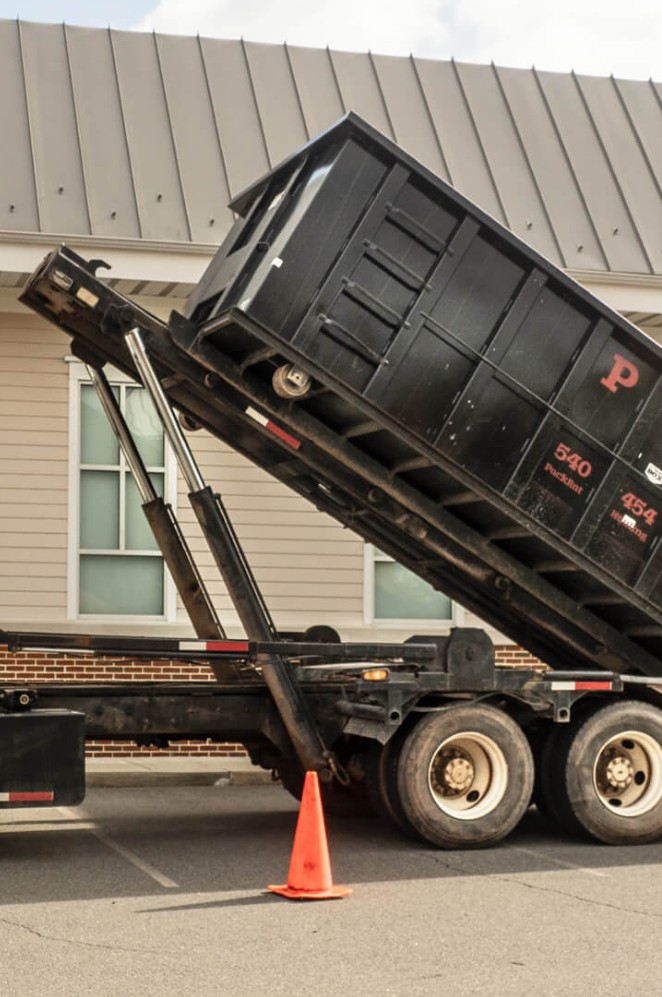
Our Roll-Off Dumpsters

10 Yard Mobile Dumpster
Holds 4x Pickup Truck Loads
Our most popular size, good for seasonal cleanouts, small remodels, roofing projects or debris removal.
Dimensions
22'9" L x 8'3" W x 4'4" H

15 Yard Mobile Dumpster
Holds 6x Pickup Truck Loads
Our most popular size, good for seasonal cleanouts, small remodels, roofing projects or debris removal.
Dimensions
22'9" L x 8'3" W x 4'4" H

20 Yard Mobile Dumpster
Holds 8x Pickup Truck Loads
Good for seasonal cleanouts, small remodels, roofing projects or debris removal.
Dimensions
22'9" L x 8'3" W x 4'4" H
Roofing Dumpster Rental: What Contractors Need to Know
Shingle weight catches more roofing crews off guard than any other single factor. Here is the math, the right container, and how to schedule a delivery that keeps your crew moving.
Roofing is one of the most common jobs we deliver for across middle Georgia, and shingle weight is the factor that creates the most friction on those deliveries. A contractor who calls with a square count gets a useful quote. A contractor who books based on an estimate that didn't account for multiple layers or heavy tile ends up with a conversation at pickup that nobody wants to have.
This guide covers the container, the math, the scheduling, and what to watch for when the job involves anything heavier than standard asphalt shingles. Whether you are a roofing contractor managing multiple jobs a week or a homeowner overseeing a tear-off, the same principles apply.
The Right Container for Roofing Jobs
The 20-yard roll-off handles the majority of residential roofing jobs in our service area. It is the right size for a standard one- to two-story home with asphalt shingles, and it fits in most driveways without requiring the homeowner to move vehicles to the street.
The 20-yard is not a concrete dumpster. The 20-yard concrete container is a separate product built for masonry, slab, brick, and block. Standard roofing debris goes in the regular 20-yard, not the concrete container, regardless of how heavy the shingles are.
When a roofing job might need something larger than a 20-yard:
- A very large residential roof, typically 40 squares or more, with a single layer of standard shingles
- Any roof with two or more existing layers being torn off
- A job where roofing debris is being combined with significant amounts of other construction material
- Commercial or industrial roofing projects
In those cases, the 30-yard is the next step. Call (678) 306-9993 with your square count and we will tell you which container fits before the truck rolls.
Shingle Weight Math
This is the part that matters most and gets skipped most often. Shingle weight is not a rough estimate -- it is math you can do before you call.
Standard three-tab asphalt shingles weigh approximately 230 to 250 pounds per square (100 square feet). Architectural or dimensional shingles run heavier, typically 300 to 400 pounds per square. A 25-square residential roof with one layer of dimensional shingles produces somewhere between 7,500 and 10,000 pounds of debris before you factor in underlayment, flashing, and anything else coming off the deck.
| Shingle Type | Weight Per Square | 25 Squares (1 layer) | 25 Squares (2 layers) |
|---|---|---|---|
| 3-tab asphalt | 230-250 lbs | 5,750-6,250 lbs | 11,500-12,500 lbs |
| Architectural / dimensional | 300-400 lbs | 7,500-10,000 lbs | 15,000-20,000 lbs |
| Wood shake | 350-450 lbs | 8,750-11,250 lbs | 17,500-22,500 lbs |
| Concrete tile | 900-1,100 lbs | 22,500-27,500 lbs | Call for guidance |
| Clay tile | 700-900 lbs | 17,500-22,500 lbs | Call for guidance |
| Metal panels | 50-150 lbs | 1,250-3,750 lbs | 2,500-7,500 lbs |
When you call for a roofing quote, give us the square count, the shingle type, and the number of layers. Those three numbers let us give you an accurate quote and tell you upfront if the job approaches the weight limit for a standard container. No surprises at pickup.
Multiple Layers and Heavy Materials
Two-layer tear-offs are where weight estimates go wrong most often. A crew that books based on a single-layer estimate and then discovers a second layer under the first is now looking at twice the shingle weight in the same container. At standard shingle weights, a two-layer tear-off on a mid-size residential roof can easily approach or exceed the weight limit of a standard 20-yard container.
The right approach: if there is any chance of a second layer, say so when you call. We will quote accordingly and flag the weight consideration before delivery. Discovering a second layer mid-job and having to call for a swap while the crew is waiting on a pitch is a situation that a two-minute conversation at booking prevents every time.
We had a roofing contractor out of Hampton who was doing a re-roof on a 28-square colonial. He called and said one layer, standard architectural shingles, gave us the square count. We dropped a 20-yard and he was on schedule. About halfway through the job he called back and said there were two layers -- the second one had been covered with an adhesive underlayment that made it look like decking from the attic.
We got a swap out to him the next morning. The job finished without further issue, but he lost half a day of crew time waiting on the swap. He calls now with the square count and always adds "and I haven't checked for a second layer yet." That flag at booking changes the whole conversation.
Joe Hardin, Co-Founder, The Dumpster Co.For concrete tile and clay tile roofs, the weight math gets serious fast. A 25-square concrete tile roof at a single layer weighs between 22,000 and 27,000 pounds. That is a different conversation than a standard shingle job. Call us before booking any tile tear-off and we will work through the numbers with you.
Scheduling Around Your Crew
A roofing dumpster needs to be on site before the first shingle comes off the roof. That sounds obvious, but it creates a specific scheduling requirement: the bin has to arrive before the crew, not at the same time, and definitely not after.
For most residential roofing jobs in our service area, booking one to two days ahead secures a morning delivery window. If your crew starts at 7:00 a.m. and you need the bin in the driveway before they arrive, say that when you book. We route by request and can prioritize early drops for contractors who communicate the need at booking.
For same-day delivery, call (678) 306-9993 first thing in the morning. Same-day is often possible but not guaranteed. A 7:30 a.m. call gives us the best chance to fit your stop into the morning route. A 2:00 p.m. call asking for a same-day drop is a harder ask.
Where to Place the Dumpster on a Roofing Job
Placement for a roofing job has one primary goal: get the bin as close to the drop zone as possible without blocking the crew's access to the structure or creating a safety hazard on the ground below the work area.
The standard placement is in the driveway, positioned so the open end of the container faces the side of the house where most of the debris will land. Shingles thrown from the roof travel a horizontal distance as they fall, and a well-positioned bin catches more of that throw than one angled perpendicular to the work area.
A few specifics worth noting for roofing jobs:
- Driveway surface protection: a loaded bin of shingles is heavy. If the driveway is older asphalt in poor condition, place scrap plywood under the contact points before delivery to distribute the load and prevent impressions.
- Overhead clearance: roofing debris does not create overhead clearance issues the way a tree or utility line does for delivery, but the truck needs clear access to set the container. Confirm the approach before you book.
- Street placement: if the driveway cannot accommodate the container, street placement requires a right-of-way permit in most middle Georgia cities. See our city-by-city permit guide before booking street placement.
Mixing Roofing and Other Construction Debris
You can load shingles, underlayment, flashing, wood decking, fascia, gutters, and general construction debris together in a standard 20-yard roll-off. The material types are compatible and all accepted. The only constraint is weight.
Where mixing creates problems: adding heavy materials on top of a shingle load that is already near the weight limit. If the bin is going to carry a full shingle tear-off plus significant amounts of decking, fascia boards, and framing material, mention that when you call. We can tell you whether a 20-yard is still the right call or whether the combined weight warrants a different approach.
For the complete list of accepted and prohibited materials across all container types, see our accepted materials guide.
For Roofing Contractors: Multi-Job Coordination
Roofing contractors running multiple active jobs at any given time have a different set of needs than a single-project homeowner. The scheduling window on a roofing job is tight -- the crew shows up, the material comes off, and the bin needs to be there and gone within a specific window. When you are managing that across three or four jobs at once, the logistics multiply.
The Dumpster Co. works with roofing contractors across middle Georgia on coordinated delivery schedules. If you are running jobs in McDonough, Stockbridge, and Covington in the same week, call us and we will map out deliveries that sequence around your crew schedule rather than around our standard route logic.
For contractors who want to discuss volume pricing across multiple jobs, that conversation starts with a call to (678) 306-9993. Give us a sense of your typical monthly volume and we will put together something that makes sense for the scope of what you are moving.
Frequently Asked Questions
Ready to book your roofing dumpster?
Call with your square count and we will give you an exact quote. Same-week delivery across middle Georgia, flat-rate pricing, no hidden fees.
(678) 306-9993 View Sizes and Book