
Who We Are
Dumpter Pro is a professional junk removal Company.
Our junk removal is a service that involves the pick up and removal of unwanted items. Depending on the items being hauled the pricing will vary.
Once the items have been removed from the property they are hauled away never to be seen again. They may end up going to a recycling center, a second use store, or a disposal station. At Junker our goal is to have most of our items NOT end up in our landfills.
Choose Yours
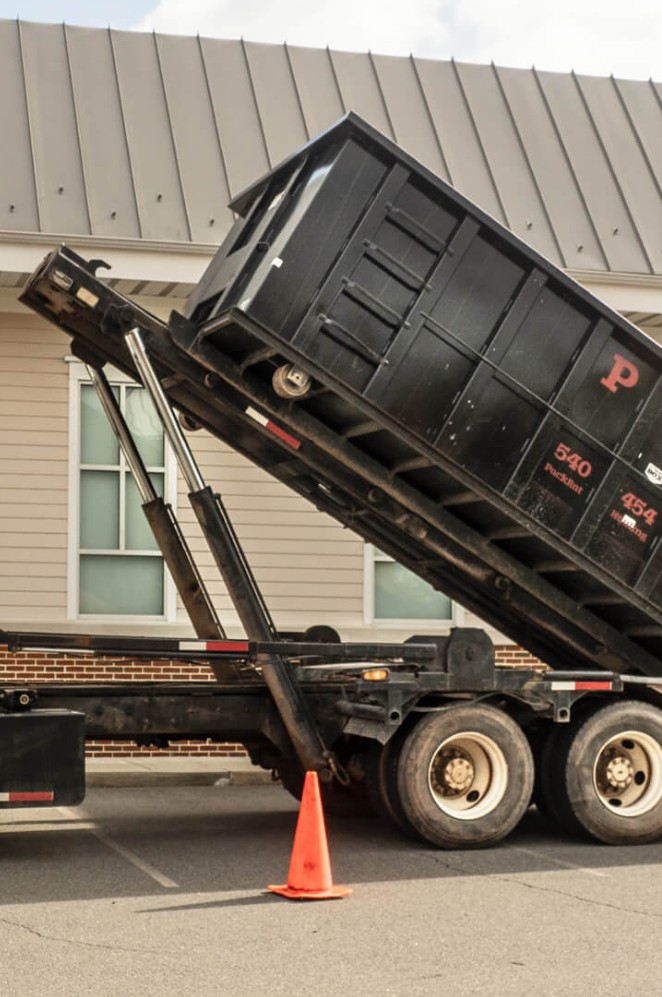
Our Roll-Off Dumpsters

10 Yard Mobile Dumpster
Holds 4x Pickup Truck Loads
Our most popular size, good for seasonal cleanouts, small remodels, roofing projects or debris removal.
Dimensions
22'9" L x 8'3" W x 4'4" H

15 Yard Mobile Dumpster
Holds 6x Pickup Truck Loads
Our most popular size, good for seasonal cleanouts, small remodels, roofing projects or debris removal.
Dimensions
22'9" L x 8'3" W x 4'4" H

20 Yard Mobile Dumpster
Holds 8x Pickup Truck Loads
Good for seasonal cleanouts, small remodels, roofing projects or debris removal.
Dimensions
22'9" L x 8'3" W x 4'4" H
Construction Dumpster Weight Limits: What Every Contractor Should Know
A bin that looks half-full can already be overweight. Weight limits exist for safety and legal reasons, and exceeding them costs money. Here is how to estimate before you load.
Volume and weight are two different things, and construction debris makes that gap more obvious than almost any other material. A bin that looks a third full can already be at or near its weight limit if the load is heavy tile, concrete board, or dense framing lumber. A bin that is visually packed to the top with light drywall scraps and insulation may be well within the weight allowance. The visual fill level tells you about cubic space. It tells you almost nothing about weight.
Weight limits on roll-off containers are not arbitrary. They are set by the truck's load capacity, the vehicle's legal axle weight ratings for public roads, and the disposal facility's equipment. Exceeding the limit is not a minor billing issue. It creates a safety problem for the driver and a legal problem on public roads. This guide explains how weight limits work, which construction materials run heaviest, and how to estimate load weight before you call so the quote you get is accurate and the pickup goes without a problem.
Why Weight Limits Exist
A loaded roll-off container is transported on public roads. Every state in the country imposes gross vehicle weight limits on commercial trucks operating on public highways and roads. In Georgia, as elsewhere, those limits are set to protect road surfaces, bridges, and overpasses from structural damage, and to keep commercial vehicles within safe stopping-distance parameters for their brake systems.
A roll-off truck hauling a container is already a heavy vehicle. The container's weight allowance is the amount of additional load the truck can carry while remaining within its legal operating weight. When a container exceeds that allowance, the truck is operating in violation of DOT weight regulations. That is a citation risk for the driver, a liability for the company, and a safety issue for every vehicle sharing the road with an overloaded truck.
This is why overweight containers generate fees rather than just being accepted anyway. The fee reflects the real cost of the problem the overweight load creates, not an arbitrary penalty.
Construction Material Weight Reference
The table below covers the most common construction debris types we see across middle Georgia job sites. Use it to estimate your load weight before calling for a quote. The weight per cubic yard figures are approximate ranges based on standard dry material conditions.
| Material | Weight Per Cubic Yard | Weight Category | Container Note |
|---|---|---|---|
| Concrete slab | 3,700-4,050 lbs | Heavy | Concrete-only container required |
| Brick and block | 2,800-3,500 lbs | Heavy | Concrete-only container required |
| Asphalt pavement | 3,200-3,600 lbs | Heavy | Concrete-only container required |
| Natural stone | 3,000-4,500 lbs | Heavy | Concrete-only container required |
| Ceramic and porcelain tile | 1,500-2,000 lbs | Medium-Heavy | Standard roll-off, flag large volumes at booking |
| Asphalt shingles | 1,800-2,500 lbs | Medium-Heavy | Standard roll-off, call with square count |
| Concrete board / cement board | 1,200-1,800 lbs | Medium-Heavy | Standard roll-off, flag large quantities |
| Plaster and stucco | 1,500-2,000 lbs | Medium-Heavy | Standard roll-off, flag large quantities |
| Dense hardwood flooring | 800-1,200 lbs | Medium | Standard roll-off |
| Framing lumber | 300-500 lbs | Light | Standard roll-off |
| Drywall / gypsum board | 400-600 lbs | Light | Standard roll-off |
| Insulation | 20-100 lbs | Light | Standard roll-off, takes cubic space not weight |
| Wet or saturated debris | Add 20-40% to dry weight | Variable | Mention if debris has been rained on |
For masonry materials including concrete, brick, block, stone, and asphalt pavement: these require the concrete-only container and are not accepted in a standard roll-off regardless of volume. See our concrete dumpster rental guide for full details.
Loads That Consistently Run Overweight
Most overweight situations we encounter in the field come from the same handful of scenarios. Knowing them in advance is the fastest way to avoid them.
Large tile demolitions
A full bathroom gut that includes floor tile, wall tile, and a tile shower surround can easily generate two to three cubic yards of tile debris. At 1,500 to 2,000 pounds per cubic yard, that is 3,000 to 6,000 pounds of tile alone, before the drywall, fixtures, and framing are added. Contractors doing full bathroom demos on multiple units of a complex or hotel should call with unit counts before booking a container for the combined haul.
Multi-layer roofing tear-offs
A second layer of asphalt shingles doubles the weight estimate for a roofing job. A 25-square roof with two layers of architectural shingles generates 15,000 to 20,000 pounds of shingle debris before the underlayment, flashing, and decking are counted. The roofing dumpster guide covers the square-count math in detail.
Foundation and slab work alongside other debris
A contractor who cracks out a section of slab or foundation wall and then tries to load it into a standard roll-off alongside mixed demo debris has created an overweight problem almost immediately. Even a small amount of concrete in a standard roll-off can push the load past the limit. Concrete goes in the concrete-only container. Always.
Commercial kitchen and bathroom renovations
Commercial kitchens and bathrooms concentrate heavy materials in a small space: thick quarry tile floors, heavy-duty plumbing fixtures, concrete underlayment for tile waterproofing systems, and commercial-grade ceramic wall surfaces. A single commercial kitchen gut can generate more weight per cubic yard than almost any residential renovation project. Call with the material breakdown before booking.
A tile contractor called us to book a 20-yard for what he described as a full bathroom renovation on a large primary suite. We quoted it standard and dropped the container. When we went to pick it up, the load was overweight by a significant margin. He had torn out a custom stone tile shower that used two-inch-thick natural stone slabs on the floor and three-quarter-inch stone on all four walls. Stone runs toward the top of the weight chart at 3,000 to 4,500 pounds per cubic yard, not the 1,500 to 2,000 pounds of standard ceramic tile.
The overage fee was not trivial. And it was completely avoidable. If he had said "natural stone, two inches thick on the floor" when he called rather than "tile bathroom demo," we would have flagged the weight consideration immediately and set the right expectation before delivery. The material description at booking is the single most valuable thing a contractor can give us on the front end of a heavy-debris job.
Joe Hardin, Co-Founder, The Dumpster Co.How Overage Fees Work
When a container arrives at the disposal facility overweight, the facility weighs the load and reports the overage to us. We apply a per-ton fee to the amount above the allowance and invoice the customer for that amount on top of the base rental rate.
The per-ton overage rate is disclosed at booking. It is not a surprise number that appears after the fact. What is sometimes a surprise is the total tonnage -- because the visual fill level of the bin does not predict weight, and because some contractors do not realize how heavy certain materials are until they see the weight ticket.
How to Estimate Before You Call
You do not need a scale. You need a rough material inventory and the weight reference table above. Here is the process in practice.
- Identify the primary material types in the load. Not just "demo debris" -- list the actual materials. Tile, drywall, wood framing, plumbing fixtures, insulation, roofing. Separate the heavy from the light.
- Estimate the cubic yardage of each heavy material. For tile, think about the square footage of tile surface at a typical thickness. For roofing, use your square count. For drywall, think in sheets (each 4x8 sheet of half-inch drywall is roughly 50 to 55 pounds).
- Multiply the cubic yardage of each material by the weight range from the table. Add them up. Compare to the container's stated weight allowance.
- If the total is close to or above the allowance, call before booking. Describe the material breakdown and the approximate volumes. We will tell you whether the load warrants a different container, a weight discussion, or whether it is within range for a standard booking.
This process takes five minutes and prevents the most common source of unexpected charges on construction dumpster rentals. For jobs with a mix of heavy and light materials, the key is identifying the heavy fraction accurately. A load that is 80 percent light drywall and 20 percent heavy tile can still be overweight if the tile fraction is large enough.
The Concrete Rule
This deserves its own section because it generates more problems than any other single weight-related issue we handle. Concrete, brick, block, stone, and asphalt pavement cannot go in a standard roll-off. Not a small amount. Not a few broken pieces. Not the thin layer of concrete topping on a wood subfloor. None of it.
Masonry materials go in the concrete-only container. If your job generates both masonry and mixed construction debris, you need two containers. The Dumpster Co. can deliver both on the same schedule. Call (678) 306-9993 and describe the full scope of what the project generates and we will set up the right combination.
The reason the rule is absolute rather than proportional is disposal processing. Clean masonry is processed at facilities that recycle it into aggregate. Mixed debris containing even small amounts of masonry cannot be processed the same way. The load gets reclassified, the processing cost goes up, and the difference comes back to the customer as a charge. There is no version of this situation that is cheaper than booking the right container at the start.
Wet Debris and Rain
Rain adds weight. This seems obvious but it catches contractors regularly, especially on longer jobs where the bin sits on site across multiple weather events. Drywall that has absorbed significant rainfall can be two to three times heavier than dry drywall. Insulation saturated with water is dramatically heavier than the same volume dry. Lumber and framing that has been rained on for several days carries substantially more weight than fresh-cut wood.
If your job site has had significant rainfall and the bin has been loading through it, mention that when you call for pickup. We can factor it into the weight conversation before the truck rolls rather than after it weighs in at the facility. Covering the bin during rain events when the debris volume is already significant is a practical step that reduces the wet-weight problem on long jobs.
Frequently Asked Questions
Heavy load? Call with the material breakdown before you book.
Five minutes on the phone prevents overages. Flat-rate pricing, disclosed weight limits, no surprises at pickup.
(678) 306-9993 View Sizes and Book