
Who We Are
Dumpter Pro is a professional junk removal Company.
Our junk removal is a service that involves the pick up and removal of unwanted items. Depending on the items being hauled the pricing will vary.
Once the items have been removed from the property they are hauled away never to be seen again. They may end up going to a recycling center, a second use store, or a disposal station. At Junker our goal is to have most of our items NOT end up in our landfills.
Choose Yours
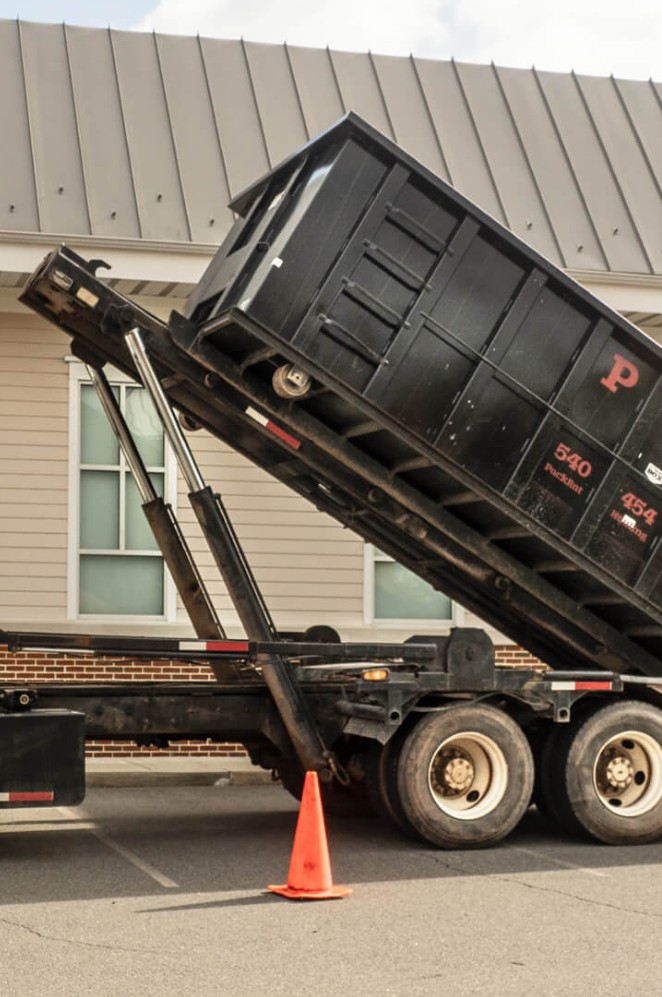
Our Roll-Off Dumpsters
10 Yard Mobile Dumpster
Holds 4x Pickup Truck Loads
Our most popular size, good for seasonal cleanouts, small remodels, roofing projects or debris removal.
Dimensions
22'9" L x 8'3" W x 4'4" H

15 Yard Mobile Dumpster
Holds 6x Pickup Truck Loads
Our most popular size, good for seasonal cleanouts, small remodels, roofing projects or debris removal.
Dimensions
22'9" L x 8'3" W x 4'4" H
20 Yard Mobile Dumpster
Holds 8x Pickup Truck Loads
Good for seasonal cleanouts, small remodels, roofing projects or debris removal.
Dimensions
22'9" L x 8'3" W x 4'4" H
Dumpster Swap-Outs Explained: How They Work and When to Call
A swap-out is not complicated. The timing of the call is what separates a smooth project from a half-day of crew downtime. Here is everything you need to know.
A dumpster swap-out is exactly what it sounds like: The Dumpster Co. pulls your full container and drops a fresh one in the same spot. For projects that generate more debris than one container holds, a swap-out is a planned part of the process, not a sign something went wrong. The difference between a swap-out that keeps a project moving and one that stalls it for half a day comes down to one thing: when you make the call.
This guide covers how swap-outs work, when to call, what happens when you wait too long, and how to set up a standing swap schedule for jobs where you know in advance that one container will not be enough.
How a Swap-Out Works
The process is straightforward. When your bin is full or approaching the fill line, you call (678) 306-9993 and tell us you need a swap at your address. We send a truck to pull the full container, haul it to the disposal facility, and drop a fresh empty one in the same location. You keep loading without changing the spot on your property where the bin sits.
Not when it overflows. Not the morning after. When you can see the bin is at or near the top rail, that is the time to call.
Morning calls get routed for same-day when capacity allows. Evening calls get routed for the next morning. We confirm the window when you call.
The driver hauls the full bin to the disposal facility. You do not need to be on site as long as access is clear and the bin is not blocked.
Same location, same size, empty and ready. Your crew can resume loading without relocating their work area or waiting for a new spot to be cleared.
When to Call
The fill line on a roll-off container is the top rail of the container walls. Material loaded to that level is the maximum legal load for transport. Anything above it means the bin cannot be picked up.
Call for a swap when the bin is at roughly 80 percent capacity, or when you can see the fill line is within a foot or two of the current debris level. That window gives us enough time to route the swap without it becoming an emergency, and it gives your crew enough loading time between the call and the swap without running out of space mid-task.
For homeowners and one-time project renters: you will usually know the morning of the day when the bin will be full. That morning call is the right time, not the afternoon when the bin is overflowing and the crew is waiting on the front porch.
Turnaround Time
Swap turnaround depends on two things: when you call and where your site is in relation to our route that day.
Same-day swaps are achievable most days when called before 8:00 a.m. We route deliveries in the morning based on the requests we have at the start of the day. A swap request that arrives at 7:30 a.m. goes into that morning's route. One that arrives at 1:00 p.m. is a harder fit into a route that is already in motion.
Next-morning swaps are the most reliable outcome for calls made during business hours. If you call at 10:00 a.m., the realistic expectation is a next-morning drop rather than a same-day. That is still a fast turnaround, and planning for next-morning rather than same-day allows you to wrap the current bin's loading cleanly and start fresh in the morning rather than mid-afternoon.
Cities further from Jackson are served on specific route days. Customers in Milledgeville, Greensboro, and Eatonton should call ahead rather than counting on same-day swap availability. The same principle applies to any city at the edges of the service area. When you book the initial delivery, ask about swap turnaround for your specific location so there are no surprises mid-project.
We had a homeowner doing a whole-home cleanout in Covington who called at 3:30 in the afternoon on a Thursday saying the bin was completely overflowing and she needed a swap immediately. She had a crew of family members helping and they had pushed hard to finish the main floor that day.
We could not get a same-day swap out to her by 3:30. The route had already moved past her area. We got there first thing Friday morning. She lost a half day of crew time because everyone was waiting on a fresh bin and nothing else on the property could be cleared until the driveway was accessible again. If she had called at noon when she could see the bin was getting close, we would have fit her into the afternoon route. Thirty minutes of heads-up would have saved half a day of project time for her whole family.
Joe Hardin, Co-Founder, The Dumpster Co.What Happens If You Wait Too Long
A container loaded above the top rail cannot be legally transported on public roads. This is not a policy preference. It is a Department of Transportation requirement for load securement and vehicle weight limits. When a driver arrives to a bin with debris sticking above the rail, the pickup fails.
There is no penalty for calling early. There is no charge for telling us you think you will need a swap in two days and asking us to keep availability. Call before you need it rather than after you are stuck.
Standing Swap Schedules for Long-Running Jobs
For projects that will run several weeks and generate multiple container loads, a standing swap schedule is more efficient than calling each swap individually. Here is how it works in practice.
When you book the initial delivery, tell us the scope of the project and how frequently you expect the bin to fill. We agree on a swap frequency, build the stops into the route on that schedule, and the containers move without a call from the site each time. You get a predictable empty bin on a predictable schedule. We get planned stops rather than emergency calls.
Standing swaps work particularly well for:
- Roofing contractors running jobs across multiple properties in the same area
- Commercial renovation projects with consistent weekly debris volume
- Property managers clearing multiple units in a development or complex
- New construction sites with ongoing framing and finish debris
- Estate cleanouts where sorting and loading is spread across several weeks
Call (678) 306-9993 to set up a standing arrangement. Describe your project scope, the cities involved, and the approximate swap frequency. We will confirm what works for your timeline and what works for our routing across the service area.
Evening Calls for Next-Morning Swaps
One of the most underused tools in swap-out logistics is the evening call. If you are wrapping up a day of loading and you can see the bin will be full by mid-morning tomorrow, calling that evening puts your swap into the next day's route at the planning stage rather than as an add-on after the route is already set.
An evening call the night before a swap is almost always more effective than a morning call the day of. The routing happens overnight. By the time your crew arrives in the morning, the swap is already scheduled rather than being squeezed in.
This is especially useful for contractors running multiple sites. An evening review of which sites are approaching full and a single call covering all of them takes five minutes and sets up the next day's swap logistics cleanly. The alternative is four separate calls in the morning when the crew is already on site and the pressure is on.
What a Swap-Out Costs
A swap-out is a second rental transaction: a pickup of the full container and a delivery of a fresh one. The Dumpster Co. uses flat-rate pricing on each container, so the swap cost reflects the size of the container and the delivery location. Call (678) 306-9993 for exact swap pricing on your container and address.
The cost of a swap-out is almost always less than the cost of booking a larger container upfront when a smaller one would have been adequate for the job. It is also almost always less than the cost of the crew downtime generated by a failed pickup on an overflowing bin. Plan for swaps when the project scope warrants them, and treat the cost as a normal line item on jobs that generate more than one container load.
For a full breakdown of how dumpster rental pricing works, including what drives swap costs and how to compare quotes, see our cost guide.
Frequently Asked Questions
Bin getting full? Call now before the crew stalls.
Same-day swaps available when called early. Flat-rate pricing, no surprise fees, fast turnaround across middle Georgia.
(678) 306-9993 View Sizes and Book