
Who We Are
Dumpter Pro is a professional junk removal Company.
Our junk removal is a service that involves the pick up and removal of unwanted items. Depending on the items being hauled the pricing will vary.
Once the items have been removed from the property they are hauled away never to be seen again. They may end up going to a recycling center, a second use store, or a disposal station. At Junker our goal is to have most of our items NOT end up in our landfills.
Choose Yours
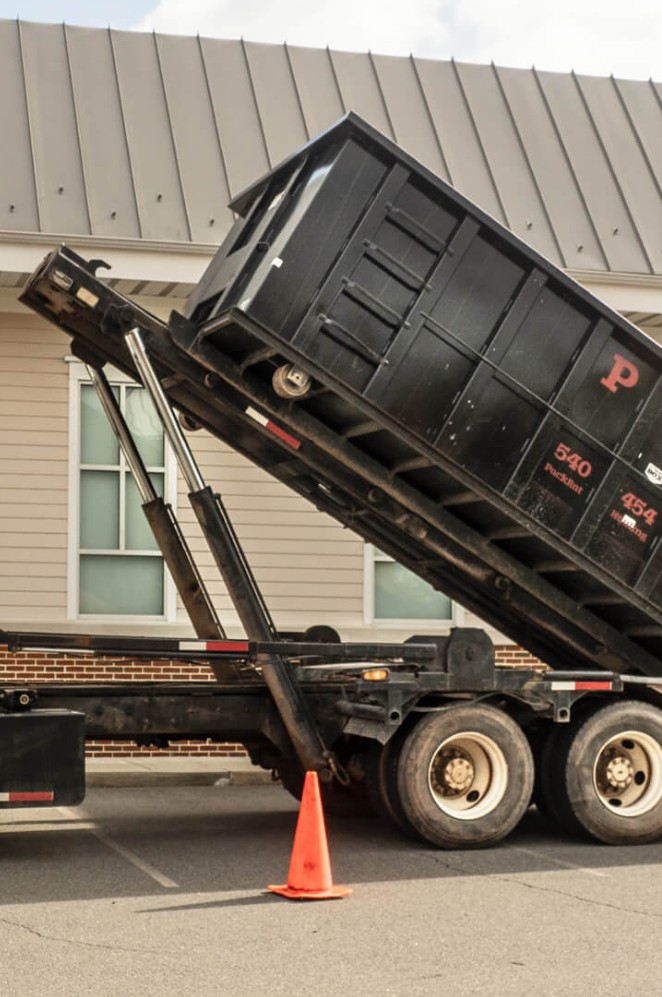
Our Roll-Off Dumpsters

10 Yard Mobile Dumpster
Holds 4x Pickup Truck Loads
Our most popular size, good for seasonal cleanouts, small remodels, roofing projects or debris removal.
Dimensions
22'9" L x 8'3" W x 4'4" H

15 Yard Mobile Dumpster
Holds 6x Pickup Truck Loads
Our most popular size, good for seasonal cleanouts, small remodels, roofing projects or debris removal.
Dimensions
22'9" L x 8'3" W x 4'4" H

20 Yard Mobile Dumpster
Holds 8x Pickup Truck Loads
Good for seasonal cleanouts, small remodels, roofing projects or debris removal.
Dimensions
22'9" L x 8'3" W x 4'4" H
Managing Construction Waste Across Multiple Job Sites
One job is straightforward. Three running at once requires a system. Here is how to coordinate dumpster delivery, swap-outs, container selection, and pickup across active sites without losing crew time.
A contractor managing a single job at a time has a simple logistics problem: book a bin, load it, call for pickup. A contractor running three or four active jobs simultaneously has a different problem entirely. Delivery windows conflict with crew schedules. Bins fill mid-project across multiple sites on the same day. A swap-out delay on one job cascades into lost time on another. The logistics of waste removal, when not managed proactively, become a source of friction that slows production across the whole operation.
This guide covers how contractors working across middle Georgia's active renovation and construction market can structure their waste removal to avoid those friction points, from choosing the right containers per job type to setting up standing delivery arrangements that reduce the number of same-day calls your crew has to make.
Choosing the Right Container for Each Job Type
The container decision is the first place contractors lose money on waste removal. Booking too small means a swap-out and crew downtime. Booking too large on a short job means paying for cubic footage that never gets used. The right call is to match the container to the debris type and volume accurately at booking rather than adjusting mid-project.
| Container | Dimensions | Best For | Call to Reserve |
|---|---|---|---|
| 20-Yard | 22L x 8W x 4H ft | Residential renos, flooring removal, roofing tear-offs, single-trade jobs, kitchen and bath demos | No -- book online |
| 20-Yard Concrete | 22L x 8W x 4H ft | Concrete slabs, driveway tear-outs, brick, block, asphalt, paver removal. Masonry only. | No -- book online |
| 30-Yard | 22L x 8W x 6H ft | Commercial renos, multi-trade jobs, warehouse cleanouts, larger residential projects, long-running sites | No -- book online |
| 40-Yard | 22L x 8W x 8H ft | Major construction, full demolition, new builds, commercial developers. Limited availability. | Yes -- call (678) 306-9993 |
For jobs that generate both masonry and mixed debris, plan for two containers from the start rather than trying to sort during the job. The concrete-only container must remain free of wood, drywall, and general debris, and the sorting problem mid-job costs more crew time than having both containers on site from day one.
Booking and Delivery Timing Across Multiple Sites
The single most common complaint we hear from contractors is that the bin wasn't there when the crew arrived. In almost every case, the root cause is the same: the delivery was called in too late, or the early morning requirement wasn't communicated at booking.
Here is what actually works for contractors running multiple sites:
Book ahead, not the morning of
One to two days ahead is the standard window for reliable delivery. Same-day is possible but not guaranteed, and after a major storm or during peak spring and summer season, same-day availability tightens fast. Contractors who book the day before their crew starts are almost never caught waiting. Contractors who call the morning of are regularly disappointed.
Communicate early morning requirements at booking
If your crew starts at 7:00 a.m. and the bin needs to be in place before they arrive, say that at booking. We route deliveries based on the requirements we know about. A contractor who mentions an early start gets prioritized on the morning route. A contractor who mentions it at 6:45 a.m. the day of does not give us any room to adjust.
Set up a standing delivery schedule for long-running jobs
For projects running four weeks or more, a standing delivery schedule eliminates the daily booking decision entirely. You agree on swap-out frequency, we build the stops into the route, and the containers move on a predictable schedule without a phone call from the site. This is particularly valuable for contractors running roofing or renovation jobs across multiple properties in the same neighborhood or development.
We had a roofing contractor who was running four jobs simultaneously across Henry and Spalding counties during a busy summer season. Every job was a single-family residential tear-off and re-roof. His process was to call us the morning each job started. That worked when he had one or two jobs. When he scaled to four, the morning-of calls started backing up against each other and he was regularly losing the first two hours of crew time waiting on a bin.
We sat down with him over the phone and mapped out his schedule for the next three weeks. Four deliveries on a Tuesday, four swaps the following Monday, four pickups the following Friday. We built it into the route at the start of the week rather than reacting to individual calls. His crew never waited on a bin again that season, and we never had a dispatch scramble trying to fit in four same-day drops. Predictability works better for everyone.
Joe Hardin, Co-Founder, The Dumpster Co.Swap-Out Strategy for Active Job Sites
A swap-out is a pickup of the full container and a drop of a fresh one in its place. For long-running jobs, swap-outs are not exceptions -- they are planned events. Managing them reactively (calling when the bin overflows) is the most expensive way to handle them in terms of crew time lost.
Call when the bin reaches the fill line, not after it overflows. An overflowing container cannot be legally transported. If the driver arrives to a bin loaded above the rail, the pickup fails, a trip fee applies, and the crew has to spend time removing material before pickup can be rescheduled. A call when the bin is at 80 percent capacity gives us time to route a swap into the next morning's schedule without a failed trip.
Evening calls for next-morning swaps. If you can see the bin will be full by mid-morning tomorrow, call the evening before. We route the next day's deliveries in the evening. A swap request that comes in at 5:00 p.m. is significantly easier to accommodate than one that comes in at 8:00 a.m. for a same-morning drop.
For high-volume jobs, pre-schedule the swap. A commercial renovation generating heavy debris volume does not need a call each time a swap is needed. Agree on a swap frequency when you book -- every three days, every five days, every Monday -- and we build it into the route. You stop thinking about it and so does your project manager on site.
Weight Limits and Construction Debris
Mixed construction debris is heavier than residential cleanout material. Drywall, tile, concrete board, roofing material, and flooring all run heavier per cubic foot than furniture, boxes, and general household junk. Contractors who load the same way they would for a cleanout job and book the same container they would for a cleanout job often find themselves at the weight limit before the bin is visually full.
A few construction materials worth flagging for weight:
- Ceramic and porcelain tile: dense and heavy. A bathroom tile demo that looks like a small volume can be surprisingly heavy once the tile and backer board are on the ground.
- Concrete board and cement board: accepted in the standard roll-off but significantly heavier than standard drywall. Mention large volumes when you call.
- Roofing shingles: see our roofing guide for the square count math on shingle weight. Asphalt shingles in quantity add up to real tonnage quickly.
- Wet debris: construction debris that has been rained on weighs more. If a job site has had significant rainfall before loading, that weight adds to the load even if the volume is the same.
When you call with a construction debris quote, describe the material types, not just the volume. "A full 30-yard of mixed demo" and "a full 30-yard of tile, concrete board, and drywall" are different loads at disposal. The material description lets us give you an accurate quote rather than a number that surprises you at pickup.
Keeping Concrete Separate
This is the rule that generates the most mid-project calls from contractors who skipped it at planning. Concrete, brick, block, and asphalt go in the concrete-only container. Not in the standard roll-off alongside other material, regardless of how small the volume seems.
The practical implication for multi-trade jobs: if your project scope includes any masonry work alongside general construction debris, plan for two containers from the start. The concrete container on site alongside the standard roll-off costs less per job than the misloading conversation at pickup and the reclassification cost that comes with it.
For full details on what the concrete container accepts and how to handle jobs that generate both masonry and mixed debris, see our concrete dumpster rental guide.
Delivery Across the Middle Georgia Service Area
The Dumpster Co. delivers across 16 cities in middle and north-central Georgia. For contractors running jobs across multiple counties in the same week, the delivery geography matters. A roofing crew covering jobs in McDonough, Conyers, and Griffin in the same week is asking for deliveries in three different counties. Calling each of those in as individual requests generates three separate scheduling conversations. Calling once to describe the full week's schedule generates one coordinated delivery plan.
When you work regularly in multiple cities across our service area, establish a single point of contact at The Dumpster Co. rather than having different people on your crew calling in individual requests. One call with the week's full schedule is faster to process, easier to route, and less likely to produce a conflict or missed delivery than four separate calls from four different crew members.
Volume Arrangements for Regular Contractors
Contractors who rent multiple containers per month across active job sites are not the same customer as a homeowner renting once for a cleanout. The Dumpster Co. works with regular contractors on coordinated delivery arrangements and volume pricing on a case-by-case basis. The starting point is a phone call to (678) 306-9993 where we can understand the scope of your regular volume, the cities you work in most frequently, and the scheduling patterns that would work best for your operation.
What a contractor arrangement typically covers:
- Standing delivery schedules for recurring jobs
- Coordinated multi-site delivery and pickup sequencing
- Volume pricing based on monthly container count and geography
- A direct line of communication for swap-out scheduling rather than routing through the general booking line
This is not a formal program with a sign-up process. It is a conversation about how to make the logistics work better for a contractor who is already giving us consistent volume. Call and we will figure out what makes sense.
Frequently Asked Questions
Running multiple sites? Let us build a delivery schedule that works.
One call covers the whole week. Flat-rate pricing, coordinated delivery, no same-day scrambles.
(678) 306-9993 View Sizes and Book