
Who We Are
Dumpter Pro is a professional junk removal Company.
Our junk removal is a service that involves the pick up and removal of unwanted items. Depending on the items being hauled the pricing will vary.
Once the items have been removed from the property they are hauled away never to be seen again. They may end up going to a recycling center, a second use store, or a disposal station. At Junker our goal is to have most of our items NOT end up in our landfills.
Choose Yours
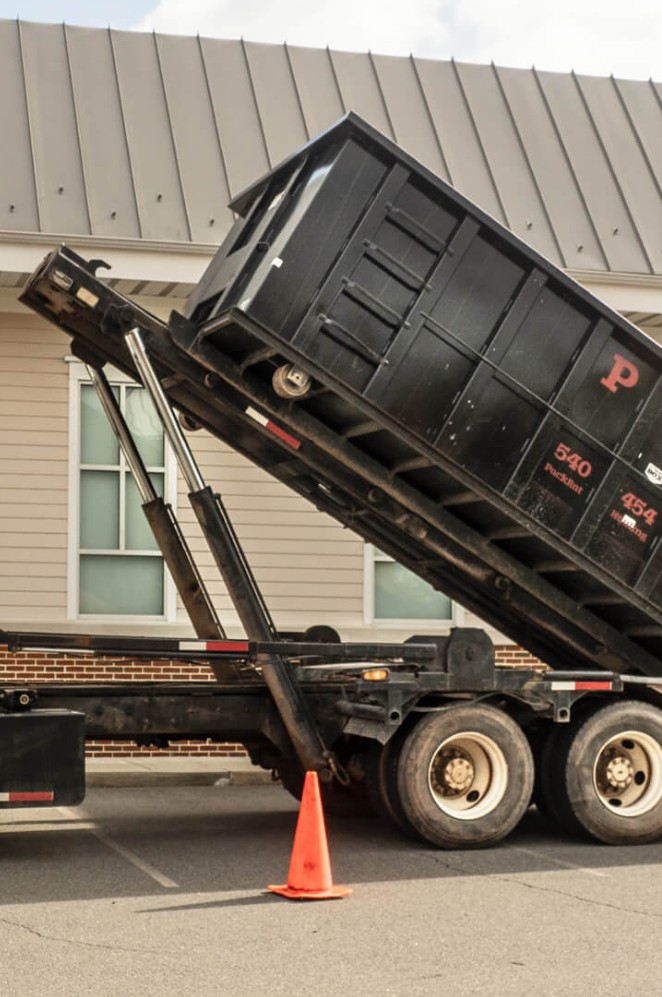
Our Roll-Off Dumpsters
10 Yard Mobile Dumpster
Holds 4x Pickup Truck Loads
Our most popular size, good for seasonal cleanouts, small remodels, roofing projects or debris removal.
Dimensions
22'9" L x 8'3" W x 4'4" H

15 Yard Mobile Dumpster
Holds 6x Pickup Truck Loads
Our most popular size, good for seasonal cleanouts, small remodels, roofing projects or debris removal.
Dimensions
22'9" L x 8'3" W x 4'4" H

20 Yard Mobile Dumpster
Holds 8x Pickup Truck Loads
Good for seasonal cleanouts, small remodels, roofing projects or debris removal.
Dimensions
22'9" L x 8'3" W x 4'4" H
How to Load a Dumpster Efficiently: Tips That Save Time and Space
The difference between a bin that fills in two days and one that lasts four is usually not the container size. It is how the material goes in. Here is how to load a roll-off dumpster so you get the most out of every cubic foot.
A 20-yard roll-off container holds a specific amount of space. What it does not hold is a specific amount of material, because how much you can fit depends almost entirely on how you load it. Two crews starting with the same volume of debris on the same project type will end up at very different fill levels depending on whether they load with any method at all or just start throwing things in.
This is not a trivial distinction. A bin that runs out of space on day two of a four-day project means a swap-out call, a wait, and lost project time. A bin that is loaded efficiently gets the job done in one container. This guide covers the loading order, what to break down before it goes in, and the specific items that consistently waste the most cubic space when loaded whole.
The Right Loading Order
Loading order is the single most important efficiency factor. Debris loaded in random order creates air pockets that cannot be filled later. Debris loaded in the right sequence builds a tight, dense load that uses available space well.
Doors, plywood sheets, large mirror frames, furniture frames stripped of cushions, flat drywall sections. These create a stable, dense base that subsequent layers can build on without creating voids.
Lumber sections, bagged debris, broken appliance parts, smaller furniture pieces stripped down. As each layer goes in, fill the gaps with smaller loose material before adding the next layer.
Rubble, broken tile pieces, loose insulation, small hardware, bagged material. Use these to pack into spaces between larger items throughout the loading process, not just at the end.
Mattresses, cushions, insulation batts, large cardboard, odd-shaped light items. These go on top where they can lay flat across the load rather than creating voids underneath them.
The principle behind this order: dense, heavy items at the bottom create a stable base. Small debris fills the inevitable gaps. Light, irregular items go on top where they cannot trap air underneath them.
What to Break Down Before Loading
Breaking things apart before they go in the bin is the highest-leverage efficiency action available to anyone loading a dumpster. A whole bookshelf is mostly air. The same bookshelf with its back panel removed and its shelves stacked flat takes a fraction of the cubic space.
Items worth breaking down before loading, in rough order of the space savings they generate:
- Cabinets and cabinetry: remove doors first, then drawers, then shelves. Load the box frame flat and stack the doors and shelves beside it. A full kitchen's worth of old cabinets loaded whole can fill a 20-yard container. The same cabinets broken down fit in half the space.
- Dressers and chests of drawers: pull every drawer out and load the drawers stacked flat. Load the frame separately. Do not load a dresser whole with drawers in -- the drawers trap air inside the body of the piece.
- Bed frames: disassemble into rail sections, headboard, footboard, and slats. These stack flat and load efficiently. A bed frame loaded whole takes up roughly four times the space of the same frame broken apart.
- Sofas and upholstered furniture: remove cushions first. If the frame can be broken apart with a reciprocating saw or a utility knife along the fabric, do it. A whole sofa is one of the worst items for space efficiency in a dumpster -- it is large, it has no flat surfaces to stack on, and it traps enormous amounts of air underneath it.
- Lumber and framing material: cut long sections to manageable lengths. A 12-foot 2x4 that cannot lie flat in the container takes up a full diagonal span of space. Cut to bin length and it loads with nothing wasted.
- Cardboard boxes: flatten every box before it goes in. A stack of flattened boxes takes the space of one un-flattened box.
- Shelving units: remove shelves from the tracks and load shelves flat. Load the upright panels separately. Do not load a shelving unit as a single assembled piece.
We picked up a 20-yard from a garage cleanout in Hampton earlier this year. The customer had filled it in one day and called for a swap because he still had half the garage to go. When we got there, the bin was loaded with whole shelving units standing upright, an intact workbench, two full sofas from an indoor sitting area off the garage, and a collection of cardboard boxes that had not been flattened.
He needed about half the cubic space he had used. If the sofas had been cut apart, the shelving units broken down, the cardboard flattened, and the workbench disassembled, the same material would have taken up maybe 40 percent of the bin's capacity. He did not need a swap. He needed a crowbar and 45 minutes before loading started. We swapped him out, but the conversation stuck with me. A lot of customers think they have run out of bin. They have actually run out of empty space inside things they could have broken down.
Daniel Conway, Co-Founder, The Dumpster Co.The Biggest Space Wasters in a Dumpster
Whole Sofas
Loaded whole, a standard three-cushion sofa can occupy 30 to 50 cubic feet of bin space. Remove cushions, cut the frame apart, and that same sofa loads in 8 to 12 cubic feet. Always the first thing to break down on a cleanout.
Assembled Shelving
Tall shelving units loaded upright create a vertical void underneath them. Break into panels and shelves, load flat, and the same material uses a quarter of the space. This applies to wire racks, laminate shelves, and metal storage units equally.
Mattresses
Mattresses are unavoidably bulky but loaded wrong they become worse. Load a mattress flat, directly against the container wall, then build the rest of the load in front of it. Never load a mattress horizontally across the bin early -- it acts as a ceiling that traps air below it.
Un-Flattened Boxes
Open cardboard boxes loaded whole are mostly air. A single large moving box takes 8 to 10 cubic feet. Flattened, the same box takes under 1 cubic foot. Flatten every box before it goes in, always.
Long Lumber Loaded Diagonally
A 12-foot board that cannot lie flat in a 22-foot container has to go in at an angle, cutting across the full diagonal and blocking space on both sides. Cut lumber to container length before loading to eliminate this entirely.
Intact Appliances
Washing machines, dryers, and dishwashers load as hollow metal boxes. A washing machine takes 15 to 20 cubic feet and weighs significantly less than that volume of solid debris. Load appliances early with smaller debris loaded inside and around them.
Managing Heavy Items
Heavy items belong on the floor of the container, not stacked on top of lighter material. Loading heavy items on top creates two problems: it makes the upper layers harder to compress and build on, and it creates safety risks when loading because items are more likely to shift or fall.
For construction debris like tile, concrete board, and dense framing material, load these directly on the bin floor in the first layers and build lighter material on top. For estate cleanouts with a mix of furniture and heavy appliances, get the appliances in first before the furniture fills the space around them.
Awkward and Oddly Shaped Items
Oddly shaped items that cannot be broken down are the hardest loading problem to solve. A water heater, an old cast iron bathtub, a large tree root ball, an irregular concrete slab section. These items create fixed voids around them regardless of how carefully you load.
The best approach for unavoidably awkward items:
- Load them early so you can plan the rest of the load around their shape rather than trying to fit them into a partially filled bin.
- Orient them to minimize the height they take up. A water heater on its side takes less vertical space than a water heater standing upright, leaving more room for debris stacked on top of it.
- Fill the gaps around them immediately. Loose rubble, small debris, and bagged material pack into the spaces around awkward items well. Do not leave those voids empty expecting to fill them later.
- Load the most awkward items toward the container walls rather than centered in the bin, so the center of the load remains workable for regular debris.
The Fill Line: Why It Matters and How to Stay Under It
The fill line is the top rail of the container walls. No material can extend above it. This is a legal transportation requirement, not a preference. A driver cannot haul a container with debris above the rail, and a load that arrives at pickup overloaded means a failed trip fee and a delay while material is removed.
Staying under the fill line sounds straightforward but causes real problems in two common scenarios:
Light, bulky material at the end of a project. Insulation, mattresses, large lightweight items -- these take up cubic space faster than they fill the bin in terms of visual density. A bin can look full at a point where significantly more dense material could still fit, then actually overflow with the last round of loading because the light items at the top extend above the rail. Load light, bulky items last and add them carefully in the final layers rather than in one final pass.
Debris that settles after loading. Some materials compress under their own weight after loading. Debris that was below the fill line during loading can shift and settle in ways that bring certain items above the rail. Walk around the bin after loading is complete and check the fill level from all four sides, not just from the loading end.
When to Call for a Swap Instead
Efficient loading extends how much you get out of a single container. It does not make a container unlimited. Some projects genuinely generate more than one container load, and the right response is a swap-out, not an attempt to cram more in above the fill line.
Call for a swap when the bin reaches the fill line with material still to load. Do not wait until the bin is overflowing. A call when the bin is at 80 percent capacity gives us time to route a swap-out without it becoming an emergency. See our swap-out guide for timing specifics and how to minimize crew downtime between containers.
If you are planning a project and unsure whether your debris volume will fit in one container, use our sizing guide before booking. Sizing up is almost always cheaper than a mid-project swap, and a swap is always cheaper than loading above the fill line and paying a failed-trip fee.
- Break down sofas, cabinets, shelving, and bed frames before loading
- Flatten every cardboard box before it goes in
- Cut lumber to container length to avoid diagonal loading
- Load heavy, flat items on the bin floor first
- Fill gaps with small loose debris as you build each layer
- Load mattresses flat against the container wall, not across the bin
- Get appliances in early and pack debris inside and around them
- Load awkward items toward the walls, oriented to minimize height
- Load light, bulky items last in the final layers
- Check the fill level from all four sides after loading is complete
- Call for a swap when the bin reaches the fill line, not after it overflows
Frequently Asked Questions
Ready to book your dumpster?
Flat-rate pricing, same-week delivery, and real answers when you call. Serving middle Georgia since 2020.
(678) 306-9993 View Sizes and Book