
Commercial Guides · Restaurants and Kitchens
Restaurant and Kitchen Renovation Dumpster Rental
A commercial kitchen gut is one of the heaviest interior jobs there is. Quarry tile, mortar beds, stainless, and hood systems add up fast, and some of what comes out of a kitchen cannot go in a dumpster at all. Here is how to plan it.
Restaurant renovations run heavy because commercial kitchen floors often have tile set in thick mortar beds, and equipment is built from steel. Before demo, sell or recycle equipment, have refrigerant recovered from coolers, freezers, and ice machines as federal rules require and send them to resale or scrap, not the dumpster, and get grease and liquids out of the building through the right channels, since liquid waste is banned from Georgia landfills. Size the container for weight, not just volume: a 20-yard or 30-yard with careful loading, and a concrete-only container for slab or floor bed removal.
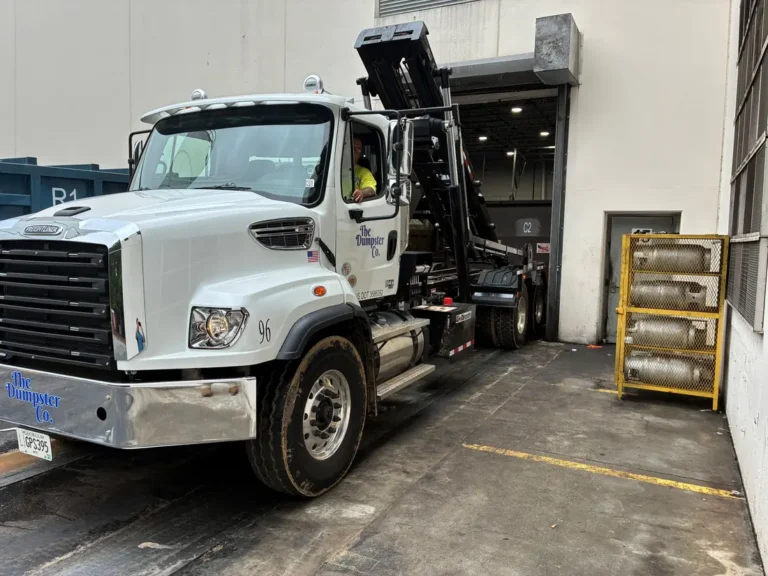
Why Kitchen Tear-Outs Run Heavy
A dining room refresh is mostly light debris: booths, millwork, carpet, decor. The kitchen is a different story. Commercial kitchens are built to take abuse, and that durability is what makes them heavy to tear out.
- Floors. Quarry tile and ceramic tile in commercial kitchens are often set in a thick mortar bed, and some kitchens have a sloped concrete topping for floor drains. That is masonry-weight debris.
- Walls. Tile, FRP panels, and cement board behind cook lines.
- Equipment. Steel tables, shelving, sinks, and hood components.
- Ceilings. Washable ceiling tile and grid.
A container that looks half full can already be at its weight allowance when it is loaded with tile and mortar. Plan by weight first. Our guide to construction dumpster weight limits explains how dense materials add up.
What to Do With Equipment Before Demo
Used restaurant equipment has a resale market, and steel has scrap value. Moving equipment out before demo frees space in the container and can put money back into the project.
| Item | Best First Option | Dumpster? |
|---|---|---|
| Working ranges, fryers, ovens, mixers | Used equipment dealers or resale | Only if unsellable, after fuel and liquids are removed |
| Stainless tables, sinks, shelving | Resale or scrap metal recycler | Accepted, but heavy |
| Reach-ins, freezers, ice machines, walk-in compressors | Resale, or refrigerant recovery then scrap metal recycler | No |
| Fryer oil and grease | Used cooking oil collector | No |
| Grease trap contents | EPD-registered grease hauler | No |
| Furniture, booths, decor | Resale or donation | Yes |
Refrigeration Units and the Refrigerant Rule
Reach-in coolers, freezers, ice machines, and walk-in systems contain refrigerant. Federal rules under the Clean Air Act require that refrigerant be properly recovered before these appliances are disposed of.
- For small appliances, defined as factory-sealed units holding 5 pounds of refrigerant or less, the final processor in the disposal chain, such as a scrap recycler or landfill, must either recover the refrigerant or obtain a signed statement verifying it was recovered, including who recovered it and when (40 CFR 82.155).
- For larger systems, refrigerant must be evacuated by a technician using certified recovery equipment before disposal, and records must be kept (40 CFR 82.156).
Refrigeration equipment does not go in our roll-offs. Have your refrigeration contractor recover the refrigerant and document it, then sell the unit or take it to a scrap metal recycler that accepts appliances. Call us at (678) 306-9993 if you are unsure about a specific item.
Grease, Oil, and Liquids
Liquids do not belong in a roll-off. Georgia prohibits liquid waste from solid waste disposal facilities except in narrow cases such as household waste, and waste that fails the standard paint filter test counts as liquid (Ga. Comp. R. & Regs. 391-3-4-.04).
- Used fryer oil: arrange a final pickup with your used cooking oil collector before demo.
- Grease traps and interceptors: have them pumped by a grease hauler. Georgia EPD requires grease trap waste haulers to register (Georgia EPD FOG program).
- Chemicals: sanitizers, degreasers, and cleaning chemicals should be used up or disposed of through proper channels, not left in equipment or containers going into the bin.
- Gas equipment: have gas lines disconnected and capped by a licensed professional before equipment is removed.
See our full list of what cannot go in a dumpster.
Choosing the Right Dumpster Size
| Scope | Typical Container | Weight Allowance | Starting Price |
|---|---|---|---|
| Dining room refresh, front-of-house only | 20 yard | 2 tons | From $410 (5-day rental) |
| Full kitchen and dining gut | 30 yard | 4 tons | From $575 (7-day rental) |
| Floor bed, slab, or masonry removal | 20 yard concrete-only | Built for heavy loads | From $550 (7-day rental) |
Split the heavy and the light. Put tile, mortar, and concrete in the concrete-only container and everything else in a standard roll-off. This keeps the general container inside its allowance. Overweight loads are billed at $85 per ton over the allowance.
Concrete-only means concrete only. The 20-yard concrete container is for clean concrete, brick, and masonry. Mixed debris goes in a standard container. Read more in our concrete dumpster rental guide.
Scheduling Around a Reopening Date
Every closed day costs a restaurant revenue, so the container schedule should never be the thing that holds up a reopening.
- Week before demo: sell or schedule pickup of equipment, arrange the final oil collection and grease trap pumping, and get refrigerant recovered.
- Demo day: have the containers on site the morning work starts, with the concrete-only container placed nearest the kitchen door.
- Build phase: swap the containers as they fill. See our swap-out guide.
- Before inspection: schedule the final pickup so the site is clean for inspections and the reopening.
For placement in a shared lot or plaza, get property manager approval and keep fire lanes clear. Our guide to retail and office buildout dumpsters covers commercial placement in more detail, and our commercial dumpster rental page covers service options.
Frequently Asked Questions
What size dumpster do I need for a restaurant renovation?
A front-of-house refresh usually fits a 20-yard dumpster. A full kitchen and dining room gut typically needs a 30-yard. If you are removing tile mortar beds, slab, or masonry, add a 20-yard concrete-only container so the heavy material does not push your general container over its weight allowance.
Can I throw a commercial refrigerator or ice machine in a dumpster?
No. Refrigeration equipment does not go in The Dumpster Co. roll-offs. Federal rules require refrigerant to be recovered before refrigeration appliances are disposed of, and the final processor must recover it or get a signed statement that it was recovered. Have a technician recover and document the refrigerant, then resell the unit or take it to a scrap metal recycler.
Can fryer oil or grease go in a dumpster?
No. Georgia prohibits liquid waste from solid waste landfills in most cases. Arrange pickup with a used cooking oil collector, and have grease traps pumped by a grease hauler registered with Georgia EPD.
Why are kitchen renovations so heavy?
Commercial kitchen floors often use quarry or ceramic tile set in a thick mortar bed, and equipment is made of steel. That debris is far denser than typical renovation waste, so containers reach their weight allowance before they look full.
Can I sell old restaurant equipment instead of throwing it away?
Yes. Working equipment often has resale value through used restaurant equipment dealers, and stainless steel has scrap value. Removing equipment before demo also frees space in your dumpster.
How much does a dumpster cost for a restaurant renovation?
At The Dumpster Co., a 20-yard starts at $410 for 5 days, a 30-yard starts at $575 for 7 days, and the 20-yard concrete-only container starts at $550 for 7 days. Prices may vary by rental length, debris type, and delivery distance.
Planning a Restaurant Renovation?
Call The Dumpster Co. to set up standard and concrete-only containers on your demo schedule so your reopening stays on track. Flat-rate pricing across middle Georgia.
Prices may vary. Contact us for a free, exact quote.