
Commercial Guides · Tenant Buildouts
Retail and Office Buildout Dumpsters: Sizing and Scheduling
A tenant improvement job moves on a tight clock, in a shared space, with a landlord watching. The dumpster plan has to fit all three. Here is how to size it, schedule it, and place it without slowing the build.
Most small retail and office buildouts in the 1,000 to 3,000 square foot range fit a 20-yard dumpster for demo and a second haul or swap for construction cleanup. Larger suites, full gut demos, and multi-unit jobs usually call for a 30-yard. Plan containers around three phases: demo, build, and punch-out. Get the landlord or property manager to approve a placement spot before delivery, keep fire lanes and drive aisles clear, and schedule swap-outs instead of letting a full container slow the crew.
What a Tenant Buildout Throws Away
A tenant improvement, often called a TI or a buildout, turns a vacant or outdated suite into a space ready for a new tenant. Whether it is a retail storefront, a medical office, or a professional office suite, the debris looks a lot alike:
- Drywall and metal studs from walls coming out or moving
- Ceiling tile and grid from drop ceilings
- Flooring: carpet, carpet tile, vinyl plank, VCT, and sometimes ceramic tile
- Millwork and fixtures: reception desks, cabinets, shelving, display fixtures
- Doors, frames, and hardware
- Packaging from new materials, which can fill a surprising share of the container
Most of this is bulky but light. Drywall and tile are the exceptions. A standard 4-by-8 sheet of half-inch drywall weighs roughly 50 pounds or more, and tile with its mortar bed is dense. Those two materials decide whether you stay inside your weight allowance.
20-Yard vs 30-Yard: Which Fits Your Buildout
| Container | Best For | Weight Allowance | Starting Price |
|---|---|---|---|
| 20 yard | Single-suite refresh, partial demo, flooring and ceiling replacement | 2 tons | From $410 (5-day rental) |
| 30 yard | Full gut demo, larger suites, multiple walls and full flooring removal | 4 tons | From $575 (7-day rental) |
| 40 yard | Multi-suite or whole-building interior demo | Quoted by phone | Call (678) 306-9993 |
When a 20-Yard Is Enough
A cosmetic refresh, such as new flooring, new paint, a few walls moved, and new ceiling tile, usually fits in a 20-yard. It also has a smaller footprint, which matters when the only available spot is a couple of parking spaces.
When to Step Up to a 30-Yard
Full gut demos produce a lot of volume all at once: every wall, every ceiling tile, every square foot of flooring. A 30-yard handles that surge with a higher weight allowance, and it is often cheaper than hauling a 20-yard twice in the same week.
Not sure? Send us the suite square footage and the scope (cosmetic refresh or full gut) when you call. We will recommend a size and a swap schedule. Our sizing guide covers more project types.
Scheduling Containers Around Buildout Phases
Buildout debris does not arrive at a steady pace. It comes in waves, and the best container plan follows them.
- Demo. The biggest surge. Have the container on site the morning demo starts, sized for the full tear-out.
- Rough-in and build. Lighter, steadier debris: offcuts, packaging, and scrap. A swap after demo, or a smaller container, keeps the site clean.
- Finish and punch-out. Packaging from fixtures and furniture, plus final cleanup. Schedule the last pickup before the tenant walkthrough.
On longer jobs, scheduled swap-outs keep a container on site with room to spare. Our short-term vs long-term rental guide explains how to plan longer rentals. For more on commercial service, see our commercial dumpster rental page.
Where a Dumpster Can Sit at a Shopping Center or Office Park
At a commercial property, the landlord or property manager decides where a container goes, not the tenant or the contractor. Get placement approved in writing before you book.
Good Spots
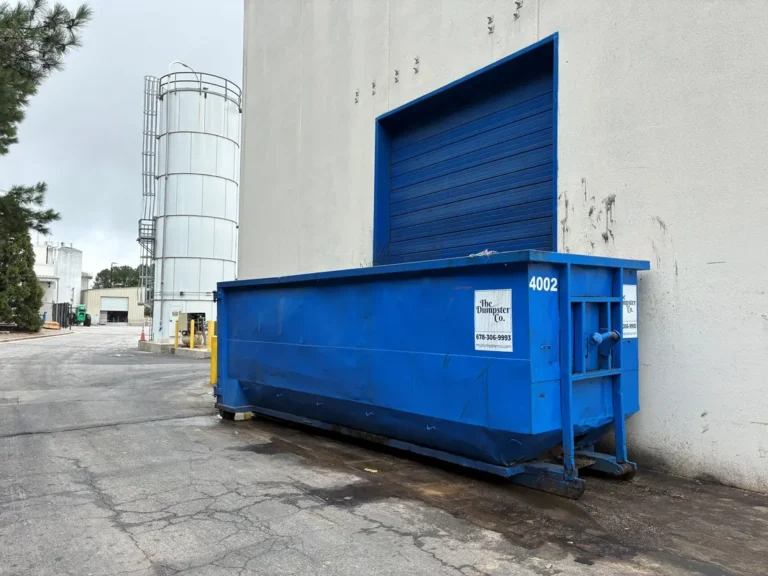
- Rear service areas and loading zones
- Back-row parking spaces away from storefronts
- A designated construction staging area, if the property has one
Spots to Avoid
- Fire lanes and anywhere marked for emergency access
- Drive aisles and entrances other tenants depend on
- Accessible parking spaces and their access aisles
- Directly on top of storm drains or utility covers
Plan the truck path, not just the container spot. A roll-off truck needs a clear, straight approach and overhead clearance to set and pick up the container. Canopies, light poles, and parked cars can block a pickup. Schedule deliveries and pickups before or after peak business hours when the lot is open.
If the only workable spot is a public street, a permit is usually required. See our dumpster permit guide.
Keeping Heavy Debris Under Control
Each container includes a weight allowance in its flat rate. Overweight loads are billed at $85 per ton over the allowance, so it pays to manage the heavy material.
- Spread drywall and tile across the container floor instead of stacking them at one end.
- Break down fixtures and millwork so they nest instead of trapping air.
- Keep concrete, such as a slab cut for new plumbing, separate. It belongs in our 20-yard concrete dumpster.
- Load below the fill line. An overfilled container cannot be hauled.
Read our guide to construction dumpster weight limits for more.
Buildout Dumpster Checklist
- Landlord or property manager approval for container placement, in writing
- Container size matched to scope: cosmetic refresh or full gut
- Delivery scheduled for the morning demo starts
- Swap or pickup dates tied to each phase
- Clear truck path and overhead clearance confirmed
- Concrete and prohibited items kept out of general debris (see what cannot go in a dumpster)
- Final pickup scheduled before the tenant walkthrough
Frequently Asked Questions
What size dumpster do I need for an office buildout?
Most small office and retail buildouts fit a 20-yard dumpster, especially cosmetic refreshes with new flooring, ceiling tile, and a few walls moved. Full gut demos and larger suites usually need a 30-yard. Multi-suite jobs may call for a 40-yard or scheduled swap-outs.
How much does a dumpster cost for a commercial buildout?
At The Dumpster Co., a 20-yard starts at $410 for a 5-day rental with a 2-ton weight allowance, and a 30-yard starts at $575 for a 7-day rental with a 4-ton allowance. Prices may vary by rental length, debris type, and delivery distance.
Where can I put a dumpster at a shopping center?
The landlord or property manager decides. Common approved spots are rear service areas, loading zones, and back-row parking. Fire lanes, drive aisles, accessible parking, and storm drains should always stay clear.
Is drywall heavy in a dumpster?
Yes. A standard half-inch 4-by-8 sheet weighs roughly 50 pounds or more, so a full tear-out adds up quickly. Spread drywall evenly in the container and watch your weight allowance.
Should I rent one big dumpster or schedule swap-outs?
For short buildouts, one right-sized container often works. For longer jobs with distinct demo, build, and finish phases, scheduled swap-outs keep a container on site with room to spare and keep the job site clean.
Can I put old office furniture in a dumpster?
Yes, furniture, cubicle panels, and fixtures are generally accepted. Consider donating or reselling usable pieces first, which frees up space in the container.
Starting a Buildout?
Call The Dumpster Co. with your suite size and scope and we will match the container and swap schedule to your build. Flat-rate commercial dumpster rental across middle Georgia.
Prices may vary. Contact us for a free, exact quote.